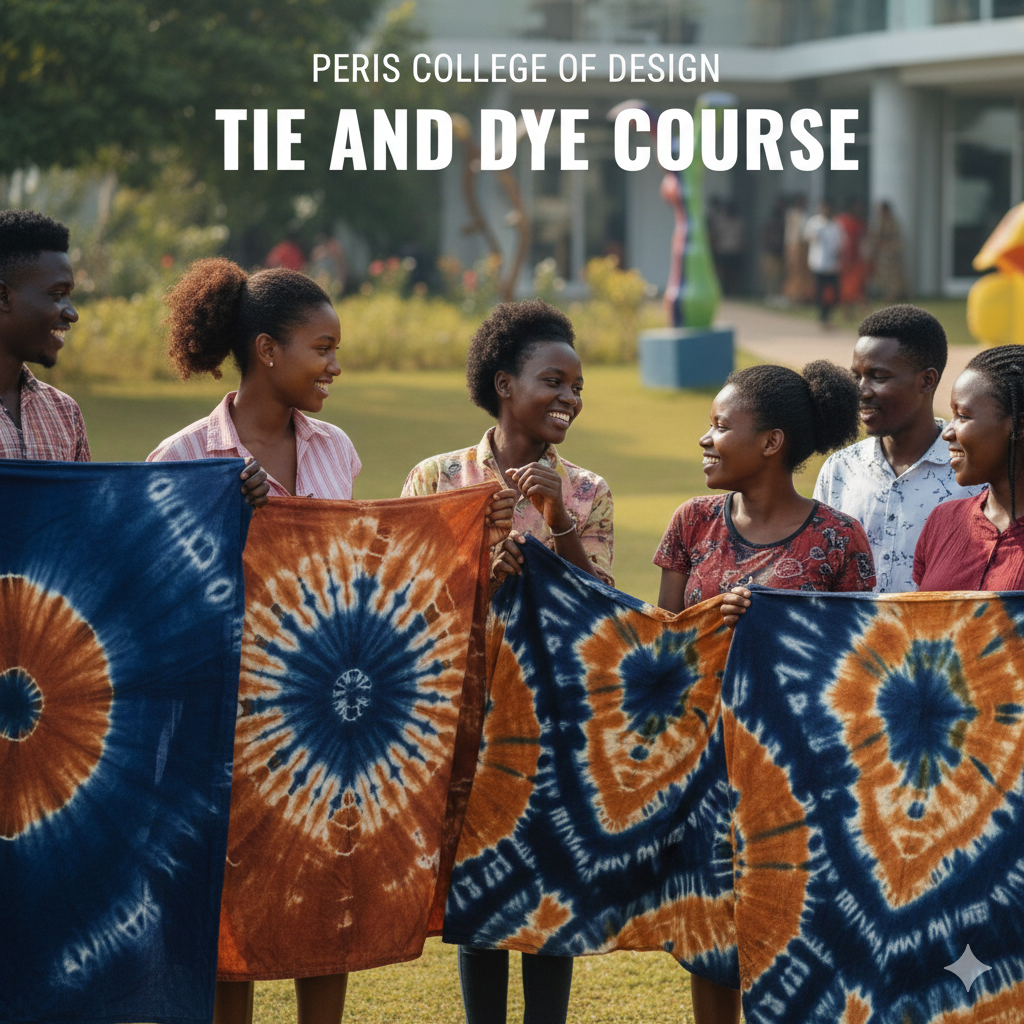
• Welcome to Peris College of Design!

    We are thrilled to have you join our creative community  


    . At Peris College of Design, we believe that creativity is a skill, a mindset, and a journey—and your tie and dye course is the perfect place to begin exploring it.

    In this course, you will:

    • Discover the history and cultural significance of tie and dye

    • Learn to select fabrics and dyes for optimal results

    • Master folding, tying, and resist-dye techniques to create unique patterns

    • Experiment with color combinations and texture effects

    • Apply your skills to fashion, home décor, and personal creative projects

    Our goal is to give you hands-on experience, confidence, and inspiration, so you can transform your ideas into beautiful, wearable art.

    Our Mission:
    To empower creative minds through innovative design education, nurturing talent, skill, and confidence for a future in fashion and design.

    Our Vision:
    To be a leading institution of design excellence, where creativity meets innovation and every student discovers the power to create, inspire, and transform.

    We are excited to see what you will create, experiment, and express throughout this journey. Welcome aboard, and let your creativity flow!


Available courses

 Is process of creating clothing by assembling fabric pieces using various techniques, tools, and equipment. It involves transforming a design idea into a finished wearable garment through careful planning, measuring, cutting, sewing, and finishing.

Key Aspects of Garment Construction

Design and Planning

This is the first stage where ideas for clothing are developed.

Designers create sketches and decide on fabric, colour, style, and purpose of the garment.

Pattern Making

Patterns are templates used to cut fabric pieces in the correct shape and size.

Patterns can be drafted manually or created using computer software.

Fabric Selection

Choosing suitable fabric based on the garment design, comfort, durability, and purpose.

Factors such as texture, weight, and stretch are considered.

Cutting

Fabric is laid out and cut according to the pattern pieces.

Accurate cutting ensures the garment fits properly.

Sewing and Assembly

Fabric pieces are joined together using stitches.

Sewing can be done by hand or using sewing machines.

Different seams and stitches are used depending on the garment type.

Fitting

The garment is tested on a model or wearer to check size, shape, and comfort.

Adjustments are made if necessary.

Finishing

Final processes such as hemming, pressing, adding buttons, zips, or decorations.

Ensures the garment looks neat and professional.

https://youtube.com/shorts/pfjsDf0qcGs?si=X4K9q-HCPomIesSp https://youtube.com/shorts/QcKNsENLPYw?si=D0FVAJl0mJLCDSlq

Garment construction is the process of creating clothing by assembling fabric pieces using various techniques, tools, and equipment. It involves transforming a design idea into a finished wearable garment through careful planning, measuring, cutting, sewing, and finishing.

Key Aspects of Garment Construction

Design and Planning

This is the first stage where ideas for clothing are developed.

Designers create sketches and decide on fabric, colour, style, and purpose of the garment.

Pattern Making

Patterns are templates used to cut fabric pieces in the correct shape and size.

Patterns can be drafted manually or created using computer software.

Fabric Selection

Choosing suitable fabric based on the garment design, comfort, durability, and purpose.

Factors such as texture, weight, and stretch are considered.

Cutting

Fabric is laid out and cut according to the pattern pieces.

Accurate cutting ensures the garment fits properly.

Sewing and Assembly

Fabric pieces are joined together using stitches.

Sewing can be done by hand or using sewing machines.

Different seams and stitches are used depending on the garment type.

Fitting

The garment is tested on a model or wearer to check size, shape, and comfort.

Adjustments are made if necessary.

Finishing

Final processes such as hemming, pressing, adding buttons, zips, or decorations.

Ensures the garment looks neat and professional.

Importance of Garment Construction

Ensures proper fit and comfort.

Improves durability and quality of clothing.

Helps in achieving the intended design and style.

Supports fashion and textile industries.

https://youtube.com/shorts/QcKNsENLPYw?si=-Yrl7_p46rPOqsTI 

The Tie and Dye course at Peris College of Design is a hands-on, creative journey into the art and science of textile design. Students will learn how to transform plain fabrics into vibrant, one-of-a-kind patterns using traditional and contemporary tie and dye techniques.

What the Course Covers:

  • Introduction to fabrics and dyes: Understanding different textiles and how they interact with colors

  • Core tie and dye techniques: Folding, tying, pleating, and resist-dye methods to create unique designs

  • Color theory and blending: Experimenting with color combinations, gradients, and patterns

  • Texture and surface design: Adding depth and dimension to fabrics through creative manipulation

  • Application in fashion and design: Incorporating tie and dye into clothing, accessories, and home décor

Learning Experience:

  • Studio-based, practical sessions emphasizing hands-on experimentation

  • Guided projects to develop personal style and creative expression

  • Exposure to modern tools, sustainable dyeing practices, and professional workflow

  • Opportunities for collaboration, critique, and showcasing work

What Students Should Expect:

  • A balanced approach combining theory and practice

  • Skill development in technical dyeing, pattern creation, and fabric handling

  • Confidence in producing original, market-ready textile designs

  • A nurturing, creative environment where students can explore, innovate, and express themselves

By the end of the course, students will not only master tie and dye techniques but also gain the creativity, discipline, and confidence needed to integrate their designs into professional fashion and textile projects.